
The United States continues to experience elevated rates of roadway fatalities despite decades of investment in technology, enforcement, and transportation infrastructure.
In a technical brief published by the Institute for Transportation Engineers (ITE), I had the opportunity to contribute my knowledge of transportation safety alongside my co-authors Dan Hennessey of the City of Santa Rosa, CA, and Angie Byrne of Toole Design Group.
The brief focuses on a critical but often overlooked factor influencing roadway safety: vehicle design. Over the past two decades, the U.S. has shifted toward larger, heavier vehicles, which can increase crash severity, obscure driver visibility, and elevate risks for vulnerable road users such as pedestrians and bicyclists.
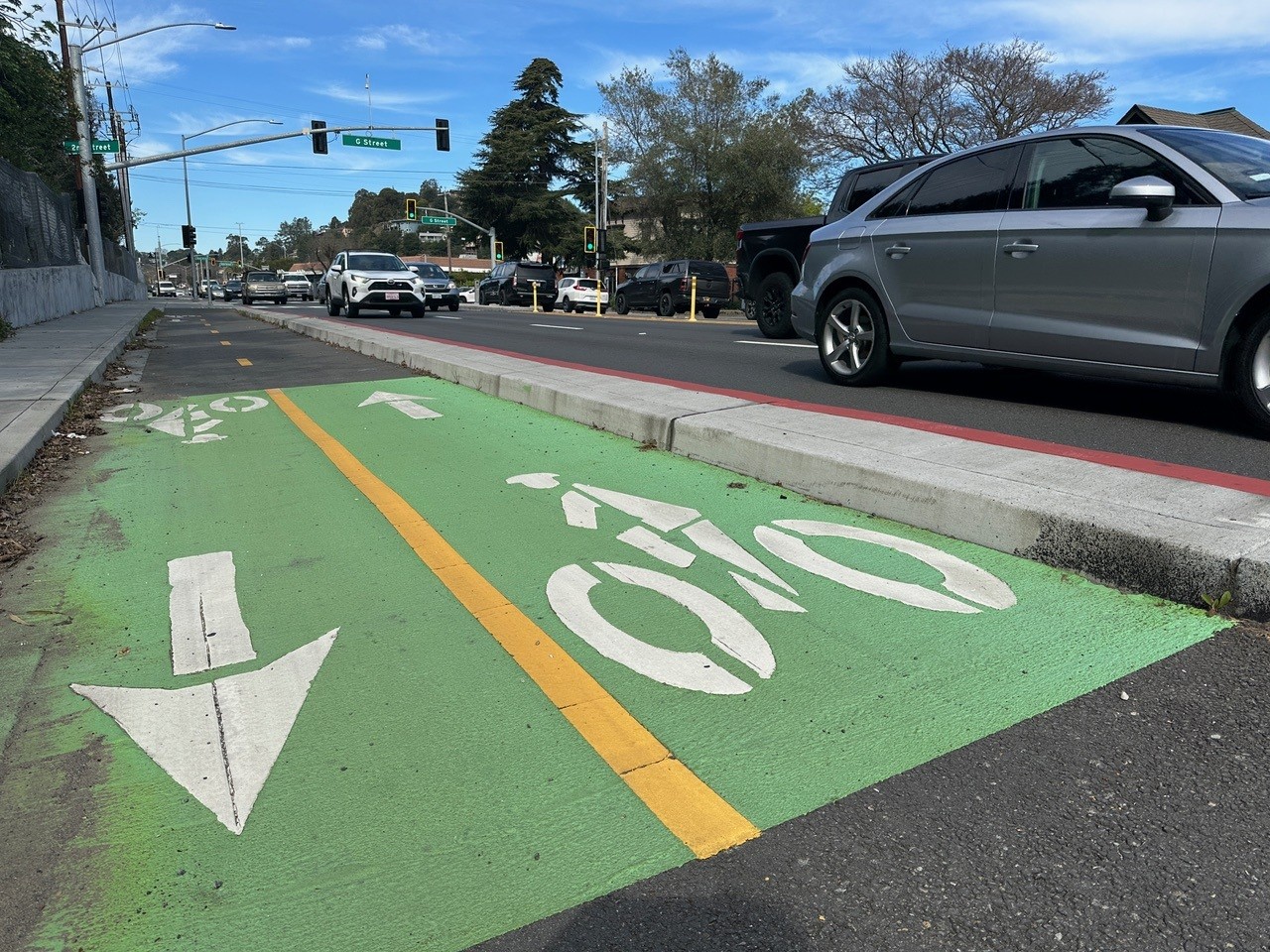
These realities reveal a complex relationship between vehicle design and street-level safety. While infrastructure improvements can help mitigate conflict points, they cannot fully offset risks introduced by large vehicles.
The findings suggest a comprehensive policy response incorporating safer street design with vehicle-focused regulations, such as effective nighttime automatic emergency braking, direct-vision standards, and front-end height limitations, while explicitly considering impacts on external road users within vehicle testing protocols. Local governments can also create safer streets by adopting weight-based registration fees and evaluating fleet composition as part of broader roadway safety planning.
Reframing vehicle design as a public health issue rather than a matter of consumer preference can help shape a transportation system that reduces fatal and serious-injury crashes through safer vehicle standards, roadway design, and public policy.
The full brief can be purchased and downloaded from ITE.

Jimmy Jessup, EIT
Jimmy is a transportation planner and engineer at Parametrix based in San Francisco, CA. He specializes in traffic impact and operations analysis, multimodal planning, and data-driven decision-making.