

By Shelby Petro, PWS, Senior Scientist
As the current President of the Society of Wetlands Scientists Pacific Northwest Chapter (SWS-PNW), I was presented with the incredible opportunity to attend an international ecology and wetlands conference in Estonia this summer. As shared in the SWS-PNW newsletter, here is a recap of my trip!
International partnership
Presented by the International Association of Ecology (INTECOL), the conference began in 1980 and has been held every four years in a different location across Europe, North and South America, Asia, and Australia. This year’s conference was held in partnership with the Society of Wetlands Scientists (SWS) Europe Chapter.
After attending the SWS annual conference in Taiwan last year, I was encouraged to attend this year’s conference in Estonia. Embarrassing to admit, but I had no idea where Estonia was. After looking it up and learning more about the country and the conference, I just HAD to go!
A breath of fresh air
Estonia is a small country in northern Europe on the Baltic Sea, south of Finland, west of Russia, and north of Latvia. It is relatively flat from glaciation, 50% forested, a quarter of the land is wetlands (mostly peatlands), and it has over 3,000 islands. It is among the least densely populated countries in Europe and has six national parks.
They’re known for having the fourth cleanest air in the world. Based on the Environmental Performance Index, which looks at factors like greenhouse emissions, achievements on carbon-negative status, environmental policies, and renewable energy sources, Estonia is in the number one spot.
Planes, boats, and bikes
So off I went, flying from Seattle to Helsinki with a connecting ferry ride across the Baltic Sea to Tallinn, the capital city of Estonia. A friend joined me for the first week as we cycled 164 miles east from Tallinn along the Baltic Sea coastline.

Familiar sites
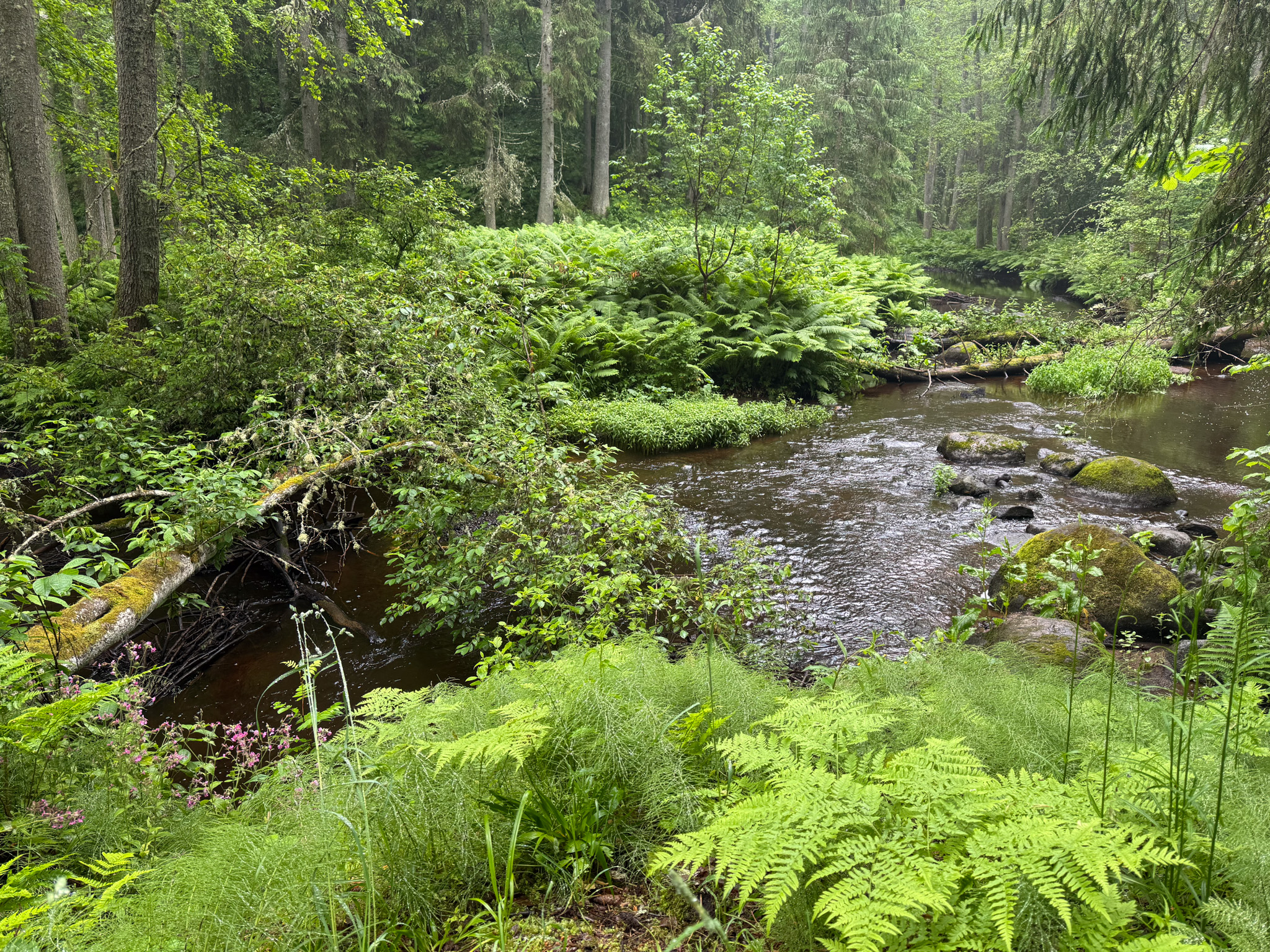
We saw rivers with brown water – tannins from the peatlands upstream; beach grasses and vegetation communities that looked identical to the shoreline restoration plant palettes I put together for the Pacific Northwest; monocultures of upland pines with rich green mossy understories; riparian vegetation species that reminded me of the horsetails, ferns, alders, and willows of home; and farm fields with wheat, wildflowers, corn, and piles of rocks left behind from the glacial ice sheet receding.

As a native Hoosier (Indiana) and a Pacific Northwest resident, it was incredibly spooky to see so many familiar landscapes and plant species in such a faraway place!
Next, we embarked on a 235-mile bike tour of the coastal islands of Hiiumaa, Saaremaa, and Muhu before looping around to Parnu. From there, I carried on another 150 miles to Tartu for the conference.
Visiting Soomaa National Park
On my way to Tartu, I spent a couple days exploring the bogs of Soomaa Rahvuspark (National Park). Soomaa is home to extensive bogs surrounded by forests, rivers, wet meadows, and wooded meadows. It is best known for its fifth season, a natural phenomenon that occurs when water from the spring thaw or heavy rain floods fields, roads, forests, and farmland.
The floods in Soomaa can occur at any time of the year and last from a few days to several weeks. During this time, up to 17,500 hectares (43,243 acres) of low-lying forests, roads, and meadows can only be navigated by water, making it a perfect place for a canoe trip.
When there are no floods, there are plenty of boardwalks and hiking trails through the park’s bogs and wetlands. During the colder months, you can ice skate on frozen rivers or explore the forests by kicksled.
I followed the Riisa bog study trail, which passes eight rest stops and a watchtower. The walk began in a spacious bog and meandered out to the forest and a river. Along this section of the trail, I saw the forest turning into a bog and vice versa – dry ground is replaced by wetland, and bog plants with ancient spruce forests. As the trail left the forest and entered the open bog, I walked by beautiful pools along the trail with swimming platforms. It was a moody day, which made the colors of the bog vegetation pop against the grey sky.
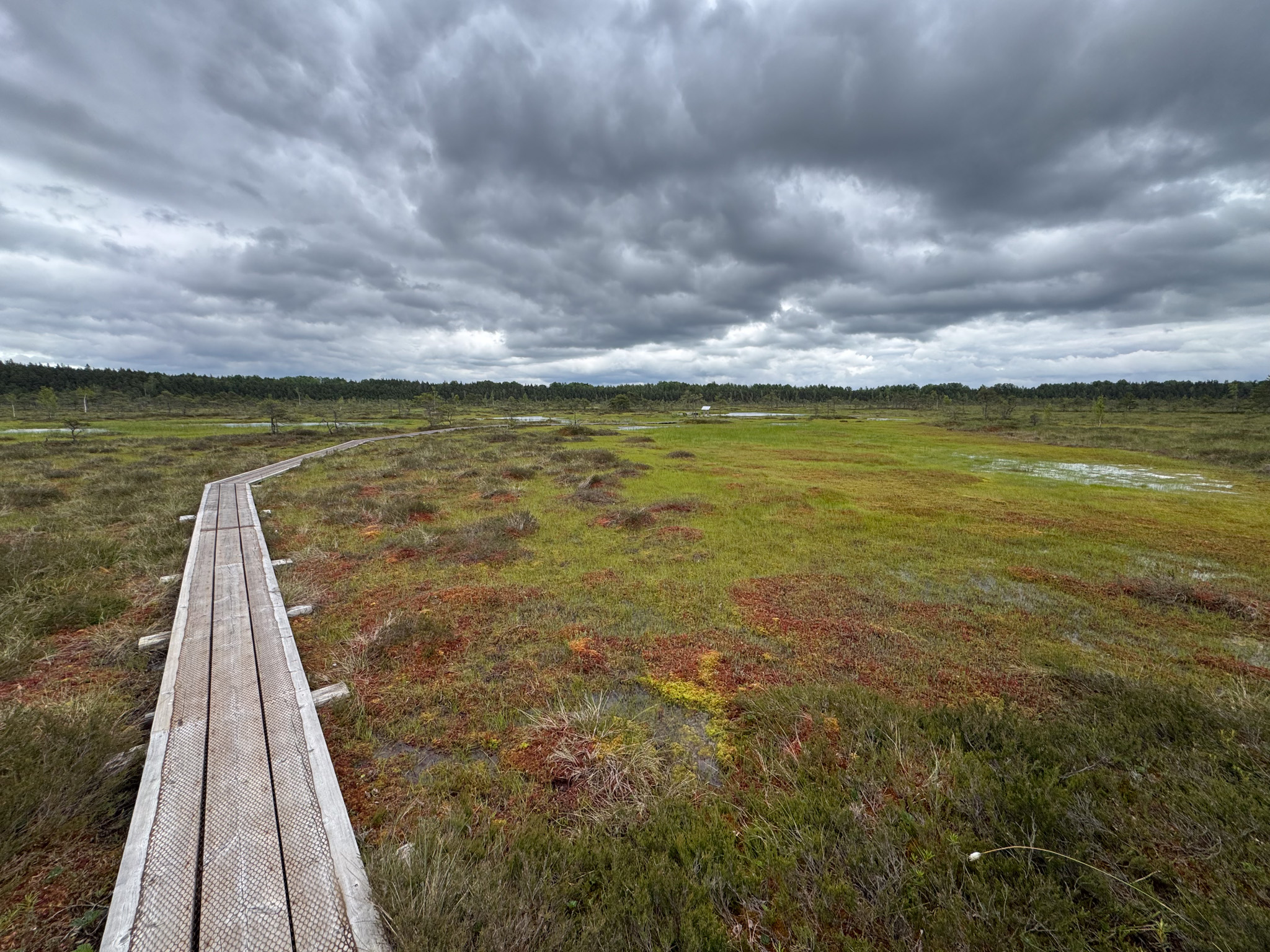
The bog trail had plant identification plaques, and I recognized many of the plant species to be the same as or cousins to the bog plant species of the PNW: bog rosemary (Andromeda polifolia), common heather (Calluna vulgaris), Scots pine (Pinus sylvestris), black crowberry (Empetrum nigrum), marsh labrador tea (Ledum palustre), peat most (Sphagnum), cloudberry (Rubus chamaemorus), bog bilberry (Vaccinium uliginosum), cowberry (Vaccinium vitis-idea), and bilberry (Vaccinium myrtillus).

After exploring Sooma National Park and relaxing at a nearby farm stay for a couple days, I cycled the rest of the journey and arrived at Tartu, Estonia, ready to begin a week of socializing and learning.
The conference begins
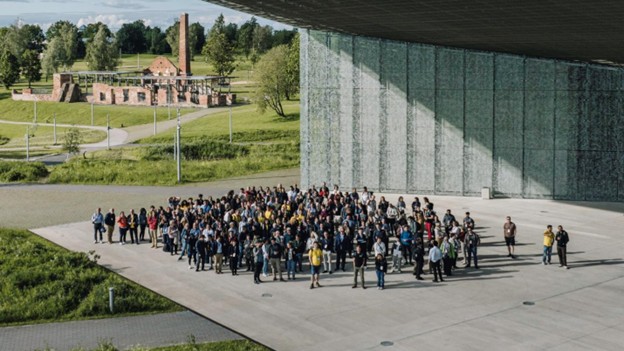
The 12th INTECOL Wetlands Conference was held in conjunction with the 20th Annual Meeting of SWS Europe Chapter on June 30 – July 4, 2025, in Tartu, Estonia. Professor Ülo Mander (University of Tartu, Estonia) and the Organizing Committee hosted 300 participants from 39 countries, many of whom came from the United States, Australia, and New Zealand, signifying a global interest in wetland restoration.
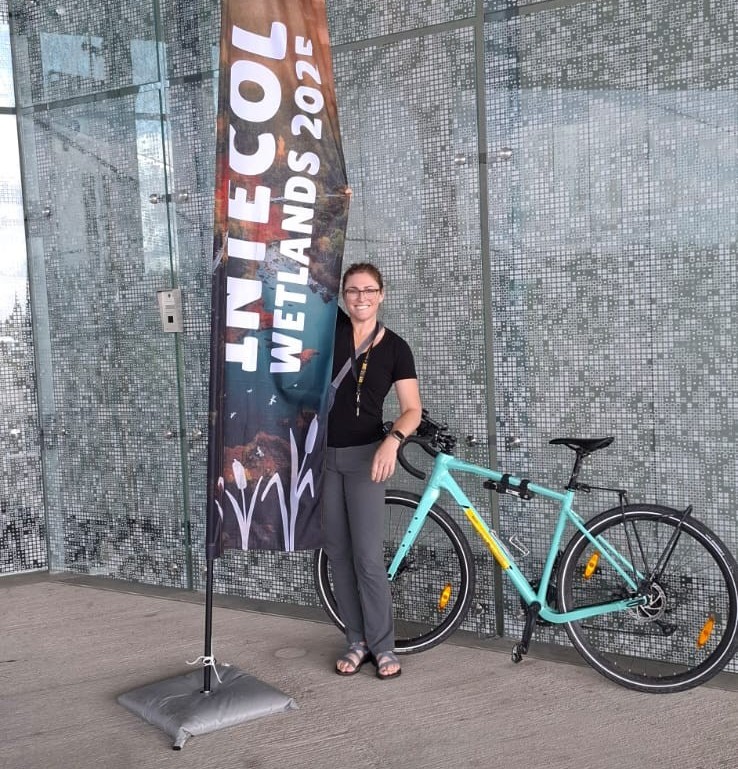
During the conference, participants had the opportunity to sign the Tartu Wetlands Declaration and the UN Global ONCE initiative. These can be used by participants to lobby wetland issues in their native countries.
There were many engaging plenary talks from wetland scientists around the globe discussing wetland restoration, climate change, regulatory and policy changes, and the future of wetland management.
I was fortunate to participate in the conference and social activities, catch up with old colleagues and make new connections.
Global perspectives on applied wetland science
I organized a symposium for the conference entitled “Global Perspectives on Applied Wetland Science: Insights and Innovations from Practitioners Worldwide.”The symposium included Kathy Taggart of Jones & Wegener Engineering and Environmental Consultants in South Africa, Ritesh Kumar of Wetlands International South Asia, Luca Marazzi of the United Kingdom Department of the Environment, and me representing Parametrix.
My portion of the discussion focused on Washington State’s fish passage barrier removal program from a consultant’s perspective and how we are navigating the environmental regulations of Washington and the United States.
Attendees from outside the US were amazed by the amount of power that tribes have to promote environmental restoration. They were also surprised by the amount of work that goes into one culvert replacement. I learned that Germany has a similar culvert replacement program, although driven by different factors.
Exploring the wetlands of Estonia
The conference included field trips to explore the wetlands and culture of Estonia. I attended a trip to Männikjärve natural raised bog and peatland restoration sites in Laiuse and Endla.
Männikjärve raised bog is well known for its picturesque convex bog landscape. It includes well-established hollow-ridgepool systems with more than 120 pools and a lake, called Lake Männikjärve. It forms part of the Endla Nature Reserve, which main assets are the diverse wetland habitats of bogs, overgrowing lakes, and karst springs. Mire research in Estonia began here in the historical Tooma village in 1910.
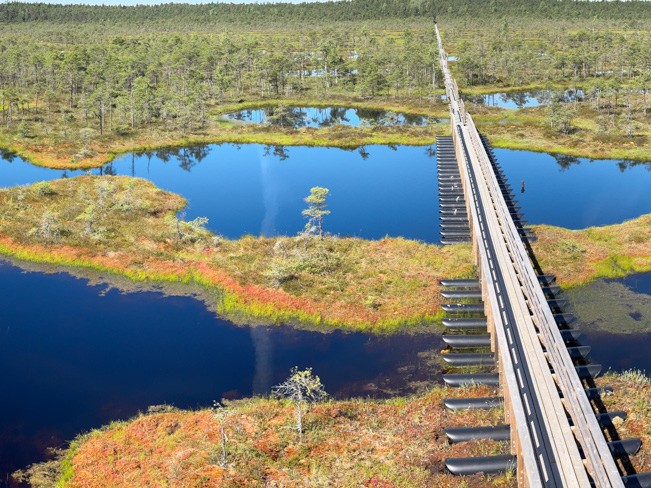
There are eight raised bog massifs separated by rivers, bog forests, and lakes. Among those, the Linnusaare bog is one of the biggest. While the core of the Linnusaare bog is in excellent natural condition and serves strictly as a nature reserve, due to historical silvicultural and agricultural drainage, some bog restoration was needed in marginal areas, which began in 2015.
Another of the bogs, the Laiuse bog, is characterized by a drumlin area – long and narrow, squeezed between drumlins but with a deep peat layer atop of gyttja and lake sediments. Part of the bog was used as a milled peat production area until it was abandoned in the 1980s. In 2017, restoration of this area began. This included plugging ditches and allowing the bog to “re-wet” naturally.
Sphagnum is now growing naturally in most re-wetted ditches. Restoration ecologists also built “beaver dams” to encourage hydrology to return, which consisted of piles of sticks to emulate a beaver dam. Bogs were not planted with stock vegetation but instead allowed to revegetate naturally from the seed bank existing within the soil profiles. Dryer areas are seeing the intrusion of trees and shrubs, which is also an effect of climate change being observed in natural and undisturbed bog systems throughout Estonia.
A surprise celebration
After the conference, I traveled back to Tallinn for a couple of days before making the trip to Helsinki to return to Seattle. I didn’t realize that my weekend in Tallinn overlapped with the XXVIII Song and XXI Dance Celebration, “Iseoma”, which is a traditional national event that occurs every five years. It featured over 40,000 choir singers, orchestral musicians, folk dancers, and folk musicians. More than 100,000 spectators gather to witness the performances. I was in line for the bathroom at a restaurant near the concert grounds while sheltering from a rainstorm when a woman handed me tickets to the sold-out concert of the song festival.
Various choirs, wind orchestras, and symphony orchestras performed 40 musical pieces during the grand concert, which lasted approximately seven hours. The spectators around me explained that Estonians have been practicing their songs since the last celebration and return home from all around the world to participate. Many songs focused on local traditions and pride in being Estonian.
It was an indescribable experience to sing along with over 100,000 others. The unity I felt between the people, their culture, and their country was unlike anything I have experienced before. It brought me to tears and made the hair on my arms stand up.
Until next time!
My travels to Estonia were unforgettable! I can’t recommend visiting Estonia and experiencing its people and environment enough. I am so grateful I had the opportunity to represent the Society of Wetland Scientists and the Pacific Northwest Chapter at the INTECOL Wetlands conference, and I look forward to attending the next one in four years, wherever it might be.