

Cascadia High-Speed Rail and I-5 Program
The Cascadia High-Speed Rail and I-5 Program integrates high-speed rail and I-5 system planning to address future growth and transportation needs across the Cascadia Megaregion, stretching from Portland, Oregon to Vancouver, British Columbia. The program coordinates with airports, regional transit, and Amtrak Cascades to ensure reliable movement of people and goods. It comprises two major initiatives: the Cascadia High-Speed Rail project, which aims to connect major cities with trains reaching 250 mph, and the I-5 Master Plan, focused on developing a multimodal corridor plan with prioritized improvements for the coming decades. Parametrix and HDR Engineering lead planning and support services.

Central Oregon Energy Resilience Plan
The Central Oregon Energy Resilience Plan was developed to strengthen the region’s capacity to anticipate, withstand, and recover from power outages while safeguarding critical services and community health. This initiative is a collaborative effort among the Central Oregon Intergovernmental Council and Crook, Deschutes, and Jefferson counties. With technical leadership from Parametrix and funding from the Oregon Department of Energy, the team assessed energy vulnerabilities and mapped essential infrastructure. The plan recommends both immediate, low-cost solutions and a long-term shift toward renewable energy systems and microgrids, ensuring sustained public safety and resilient communities as the region grows.
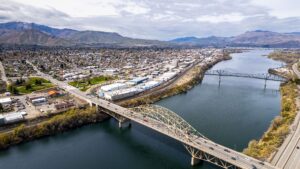
Wenatchee Comprehensive Greenhouse Gas Inventory
The City of Wenatchee, Washington, in collaboration with Sustainable North Central Washington, completed its first comprehensive GHG inventory using global and state guidelines. Led by Parametrix, the project collected local and consumption-based emissions data, conducted calculations, and established a detailed audit trail. The results informed a baseline report and a strategic roadmap, including input from city, utility, and community stakeholders. This inventory created Wenatchee’s first quantitative emissions baseline, shaping a strategic plan that targets impactful, cost-effective GHG reduction strategies in areas like building electrification and energy efficiency.
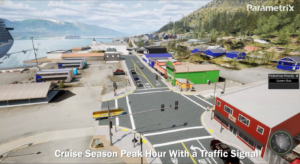
Tongass Avenue and Water Street Corridor
The Tongass Avenue and Water Street Corridor encompasses the Water Street and Tongass Avenue viaducts, along with the connecting roadway that together form a continuous
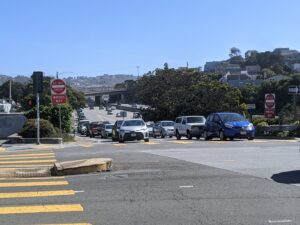
I-280 Northbound Ramp/Geneva Avenue Safety Study
The I-280 Northbound Ramp/Geneva Avenue Safety Study examined ways to improve multimodal safety and address backups at the I-280 northbound off-ramp at Geneva Avenue. This street is one
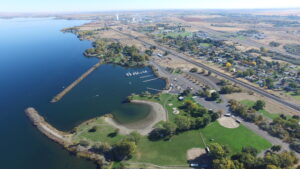
Port of Morrow Water Treatment & Reuse Program
The Port of Morrow is a major Oregon hub that reuses over 2.7 billion gallons of industrial wastewater each year.